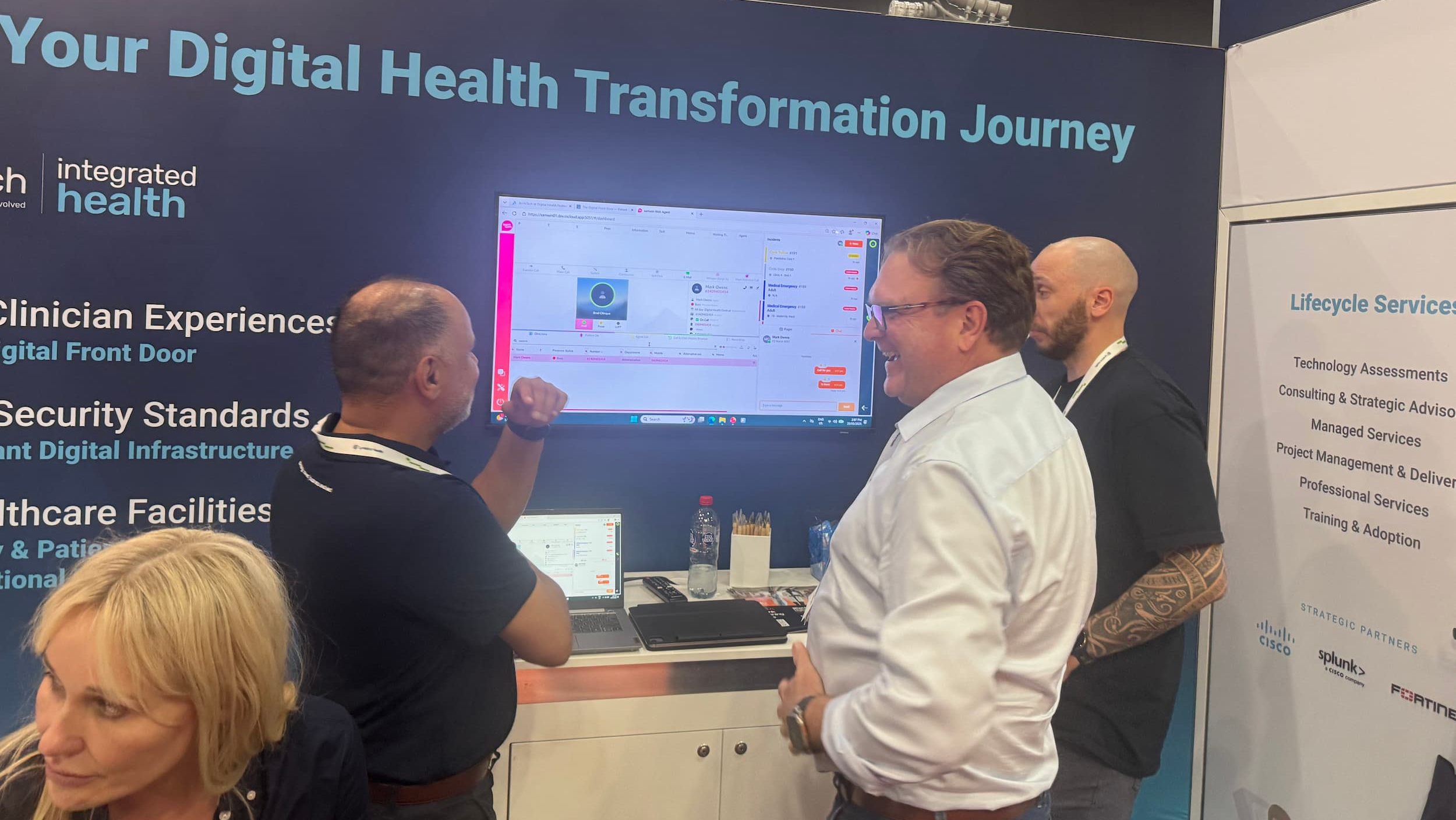
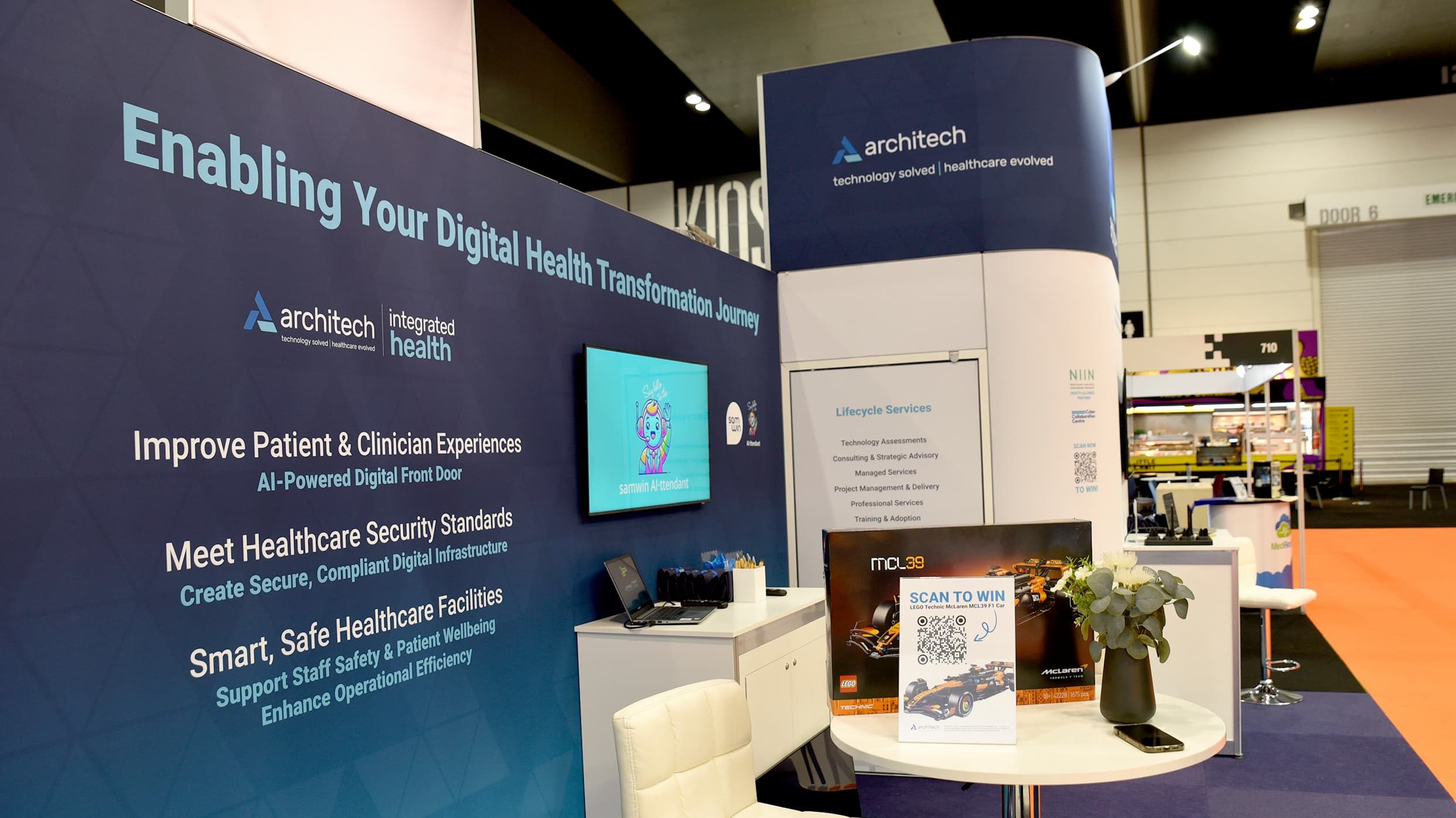
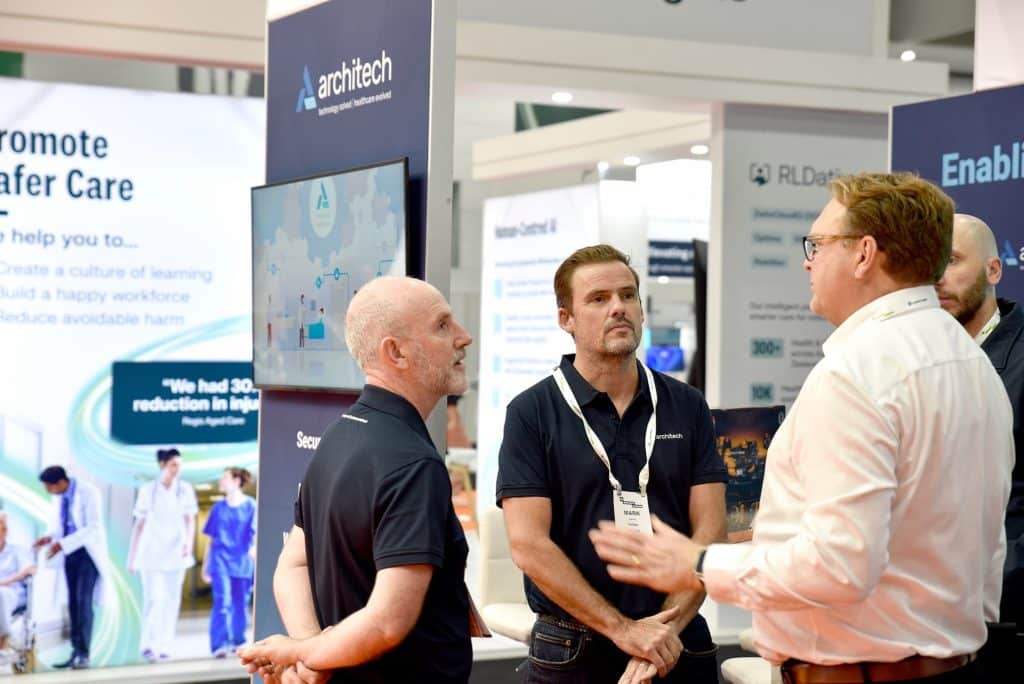
The Digital Health Festival brought together more than 8,000 healthcare leaders, clinicians, innovators, and decision-makers across two packed days in Melbourne. It was one of the strongest turnouts the event has seen, and the energy on the floor reflected just how much momentum there is behind digital transformation in Australian healthcare right now.
The Voitec team attended DHF26 alongside our partner ArchiTech, and it gave us an excellent opportunity to take the pulse of where the industry is heading, and where the real conversations are happening.
AI Was Everywhere. But What Kind?
Walk the floor at any major tech conference in 2026 and you will see the same thing: AI-powered, AI-enabled, AI-driven. DHF26 was no different. Almost every booth carried at least one of those three labels, and healthcare was no exception.
The majority of AI on display at DHF26 was clinical in nature. Diagnostic support tools, imaging analysis, patient monitoring platforms, and workflow automation for clinical teams. This makes sense. Healthcare has urgent and specific problems that AI can meaningfully address, and vendors have rightly followed that demand.
What was notably less represented was AI applied to the communications layer of healthcare, and specifically, Voice AI.
The Voice AI Gap in Healthcare
Out of the hundreds of exhibitors at DHF26, only a small number were talking about Voice AI in any meaningful way. Voitec and ArchiTech were among them, and that distinction opened some genuinely engaging conversations on the floor.
Healthcare organisations face unique communication challenges. High call volumes, complex routing requirements, critical handoffs between departments, and patient-facing interactions that demand both accuracy and empathy. These aren’t problems that a clinical AI tool is designed to solve.
Voitec AI addresses precisely this layer: the voice communications infrastructure that keeps hospitals and health services running.
The Voice AI Gap in Healthcare
Out of the hundreds of exhibitors at DHF26, only a small number were talking about Voice AI in any meaningful way. Voitec and ArchiTech were among them, and that distinction opened some genuinely engaging conversations on the floor.
Healthcare organisations face unique communication challenges. High call volumes, complex routing requirements, critical handoffs between departments, and patient-facing interactions that demand both accuracy and empathy. These aren’t problems that a clinical AI tool is designed to solve.
Voitec AI addresses precisely this layer: the voice communications infrastructure that keeps hospitals and health services running.
samwin and the Single Pane of Glass
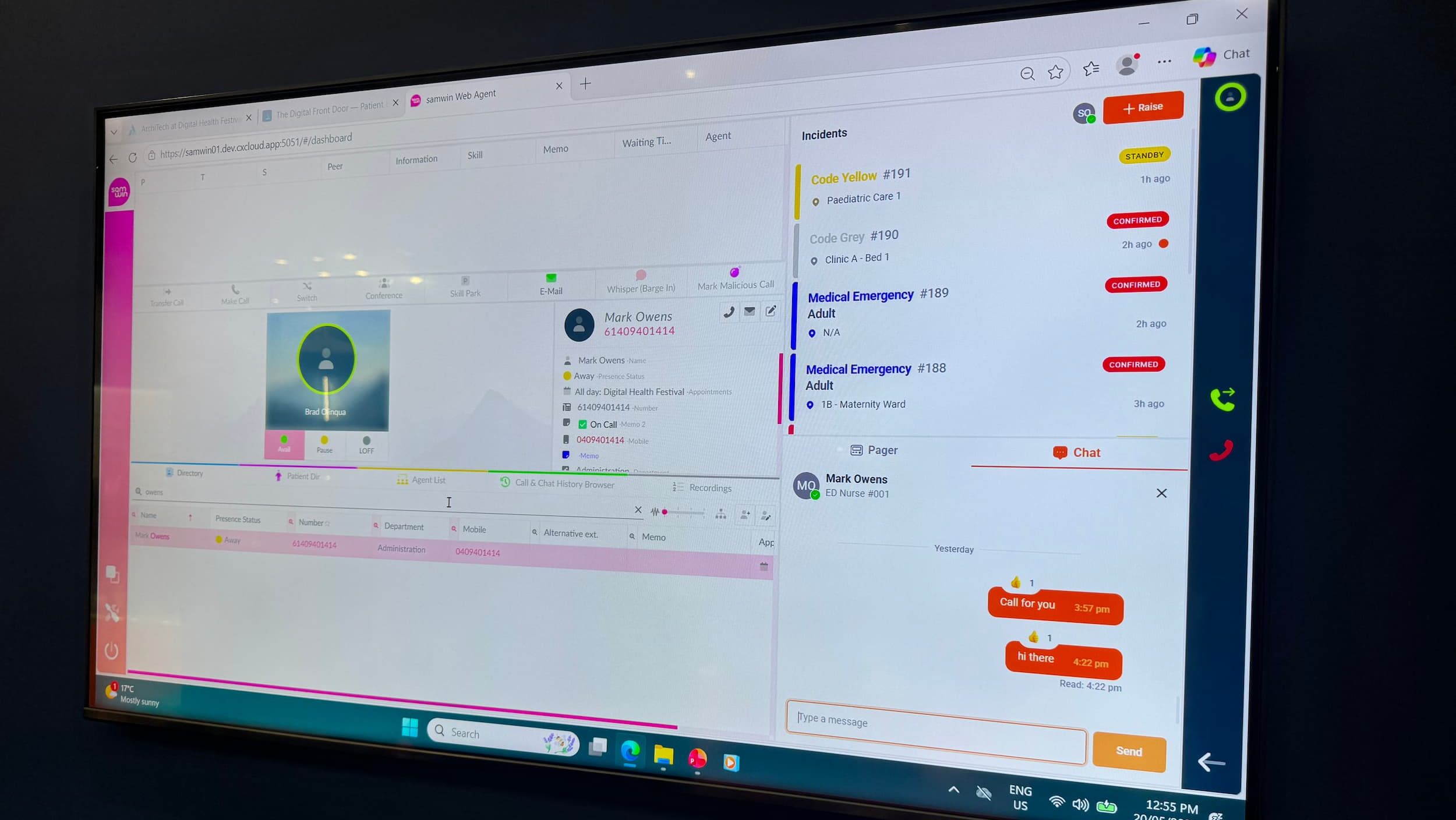
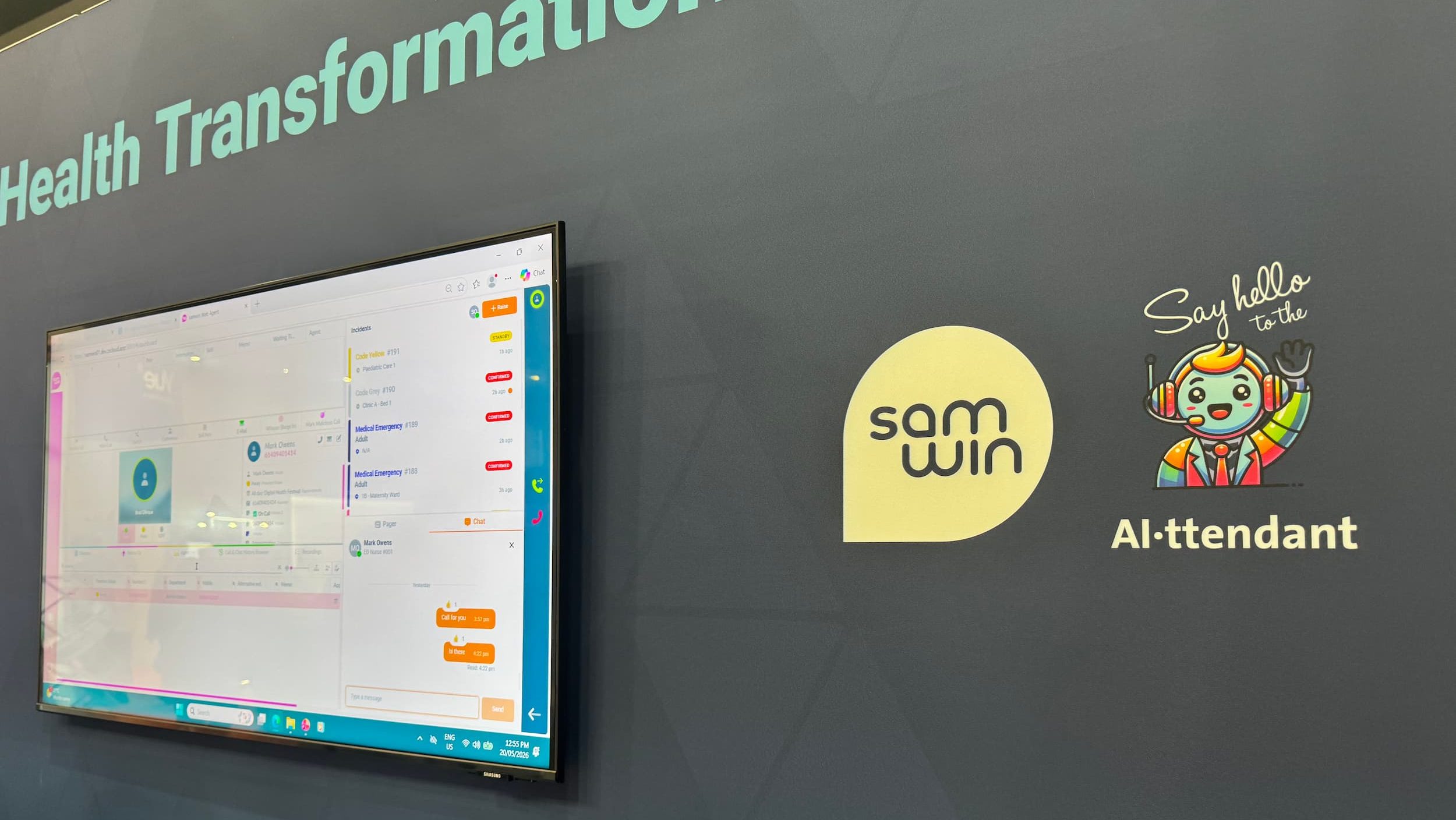
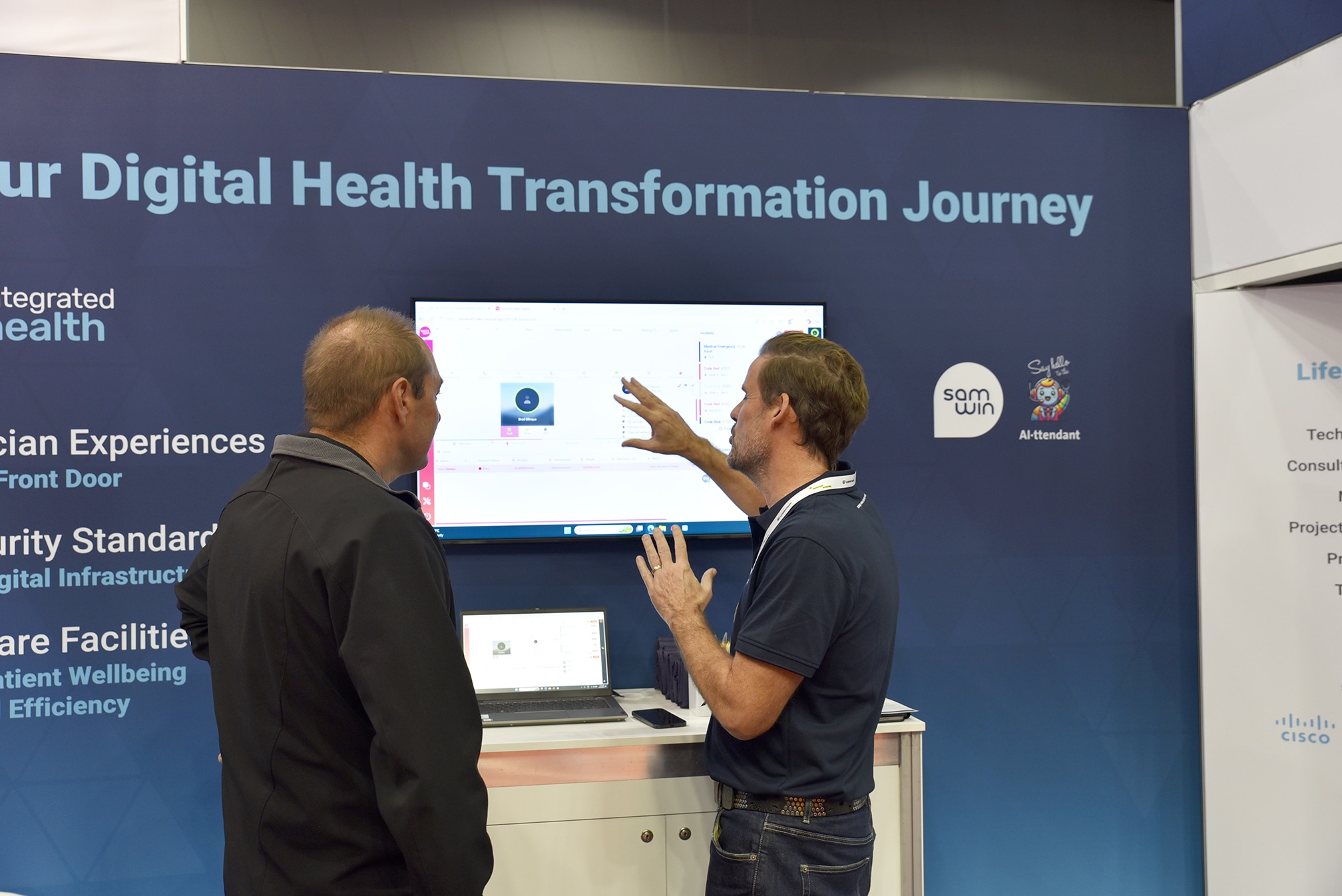
The conversations that resonated most with attendees centred on one key capability: how samwin integrates with existing hospital technologies to deliver a single pane of glass for switchboard operators.
For many hospitals, the switchboard sits at the centre of everything. It is where calls are received, triaged, and directed, across departments, wards, on-call rosters, and external services. Yet the operators managing that environment are often working across multiple disconnected systems.
samwin changes that. By integrating directly with the hospital technologies already in place, including patient management systems, directory services, and communication platforms, samwin gives switchboard operators a unified, intelligent view. Less switching between systems. Fewer errors. Faster, more confident call handling.
This is where Voice AI and practical communications infrastructure meet. It is not about replacing the operator. It is about equipping them to do their best work, even under pressure.
Key Takeaways from DHF26
Reframing Voice AI as an Administrative Tool: Healthcare leaders often conflate Voice AI with clinical diagnostic tools. We must clarify that our solution is administrative, focusing on logistics rather than clinical decision-making.
Replacing Outdated IVR Systems: Replace rigid, legacy 'press 1 for X' menus with intuitive, conversational interfaces that connect patients to the right destination faster.
Tangible Operational Impact: Use real-world examples, like the Royal Children's Hospital, to demonstrate that even a 20% reduction in abandoned calls can alleviate immense pressure on frontline staff.
Centralising Fragmented Switchboards: Highlight the ability to unify siloed multi-site switchboards, ensuring calls are always routed correctly, even during staff breaks or shift changes.
Overcoming the 'Try-Before-You-Buy' Barrier: Address hesitation by moving stakeholders from theoretical risk assessment to practical, lived experience, proving the technology solves daily friction points.
The Opportunity Ahead
DHF26 reinforced something the Voitec team has been observing across the region: healthcare organisations are ready to invest in digital transformation, but communications is often the layer that gets overlooked in that conversation.
That is exactly the gap we are here to help close.
If you are working with healthcare providers and exploring how Voice AI and integrated attendant console solutions can support better operations, we would welcome the conversation.